
Key Takeaways
- Online marketing is strictly internet-based, focusing on channels like SEO, PPC, and Social Media.
- Digital marketing is the broader umbrella, covering all electronic media including TV, radio, and electronic billboards.
- Scope is the main differentiator; digital agencies manage offline-to-online (O2O) ecosystems, not just website traffic.
- Data attribution differs; digital agencies track cross-channel impact (e.g., how a radio ad drives a mobile search).
- Choice depends on business type; local retailers often need full digital support, while e-commerce stores may only need online marketing.
The distinction between these two terms is often blurred, but for a business owner in 2026, the difference in scope and strategy is critical.
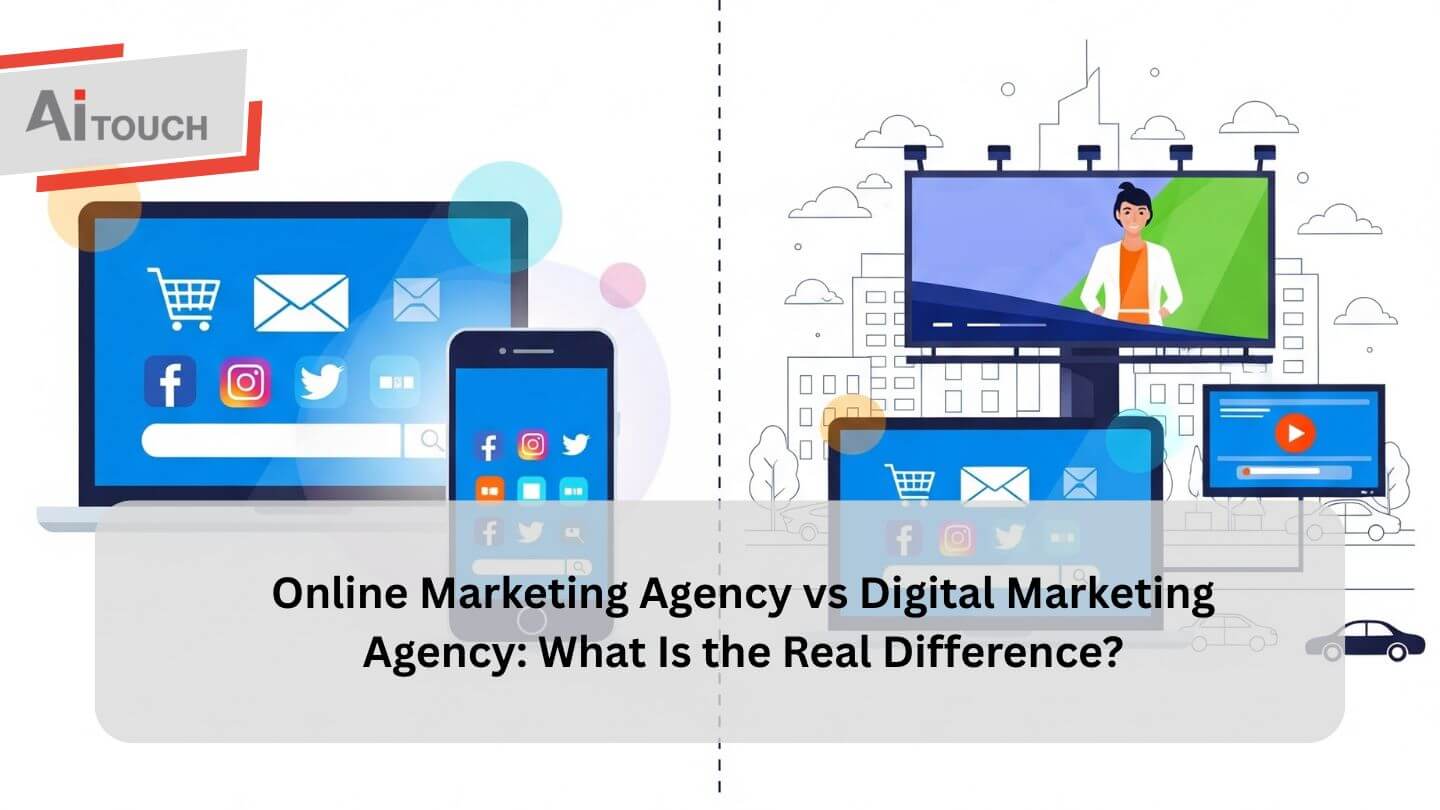
An Online Marketing Agency focuses exclusively on internet-based channels (SEO, Social, PPC) to drive web traffic.
In contrast, a Digital Marketing Agency covers the entire spectrum of electronic media, including “offline digital” channels like electronic billboards (DOOH), SMS, Connected TV (CTV), and radio.
While all online marketing is digital, not all digital marketing is online.
Are you looking for a specialist to boost your website rankings, or a partner to manage your brand’s entire electronic footprint?
Comparison Table
| Feature | Online Marketing Agency | Digital Marketing Agency |
| Primary Focus | Internet-based channels (Web, Social, Email) | All electronic channels (Online + Offline Digital) |
| Key Channels | SEO, Google Ads, TikTok/Meta Ads | All Online + Digital Billboards, SMS, Radio, TV |
| Data Scope | Click-throughs, Web Conversions, CPC | Omnichannel Attribution, Brand Lift, Footfall |
| Best For | E-commerce, SaaS, Dropshipping | Local Retail, Multi-location Brands, FMCG |
| Cost Model | Often lower, project-based or retainer | Higher, covers wider tech stack & media buying |
How Do Online Marketing Agencies Drive Growth?
These agencies specialize in the “always-on” internet layer of your business, focusing purely on capturing demand that already exists on the web.
An online marketing agency lives in the browser. Their entire infrastructure is built around capturing user attention on screens, specifically mobile and desktop.
They are specialists in algorithms, utilizing tools like Google Analytics 4 and SEMrush to tweak campaigns in real-time.
For most purely digital businesses, such as e-commerce stores or SaaS companies, this is often the most efficient route. You aren’t paying for “brand awareness” on a digital billboard; you are paying for a direct click to your landing page.
Ideally Suited For:
- E-commerce Stores: Where the entire transaction happens on a website.
- Startups: With limited budgets requiring immediate, trackable ROI.
- Niche B2B: Targeting specific job titles via LinkedIn or Search.
How Does a Digital Marketing Agency Operate?
A digital marketing agency manages the complete electronic ecosystem, bridging the gap between what customers see in the real world and do on their phones.
This is the “umbrella” partner. A comprehensive Digital Marketing Agency does not just look at your website; they look at how technology intersects with your customer’s daily life.
This includes “offline digital” tactics that have become massive in 2026, such as Programmatic Digital Out-of-Home (DOOH) advertising, those digital billboards that change ads based on the weather or time of day.
They also handle legacy digital formats that are making a comeback, like radio (via Spotify/Podcasts) and SMS marketing, ensuring your brand message is consistent whether a customer is driving past a digital sign or scrolling through Instagram.
Includes at least one of:
- Cross-Channel Strategy: Unifying SMS, Email, and Social into one flow.
- Offline Digital Access: Buying space on digital billboards or elevator screens.
- Advanced Tech: Using beacons or geofencing to trigger ads when customers are near a store.
- Brand Consistency: Ensuring the TV ad matches the landing page visuals.
Online Marketing Agency vs Digital Marketing Agency: The Core Differences
While the tools often overlap, the strategic approach and depth of service differ significantly between the two.
1. The Scope of Channels
Online agencies stop at the internet connection; digital agencies follow the technology.
An online agency will maximize your Google Ads spend and optimize your Facebook creatives. However, if your target audience is non-technical or local, an online-only approach might miss them.
A digital agency can layer in SMS blasts to existing customers or run ads on Connected TV (CTV) services like Netflix or Disney+, reaching users in their living rooms, not just at their desks.
Key Difference:
- Online: SEO, PPC, Social Media, Email.
- Digital: All of the above + Digital Billboards, Radio/Audio, SMS, TV.
2. Data & Attribution Modeling
Online agencies track clicks; digital agencies track ecosystems.
Online marketing is famous for its direct attribution, you know exactly which ad caused a sale.
Digital agencies face a harder challenge: “Did that digital bus stop ad cause the user to search for us later?”
In 2026, digital agencies use advanced attribution modeling to correlate offline digital exposure with online spikes in traffic, giving you a holistic view of brand health rather than just “Cost Per Click.”
Real-World Scenario:
- Online Approach: “We spent RM1,000 on Google Ads and got 10 sales.”
- Digital Approach: “We ran a digital radio spot and saw a 20% lift in direct brand searches during commute hours.”
3. Cost & Resource Structure
Specialization vs. Breadth affects your monthly retainer and media spend.
Online agencies often have lower overheads because they rely on software.
Digital agencies typically require higher budgets because they manage media buying across more expensive platforms (like digital signage networks) and require more diverse talent (audio engineers, video producers for TV, etc.).
Budget Considerations:
- Online: Lower barrier to entry; scalable based on ad spend.
- Digital: Higher retainer for broader strategic management.
Which One Suits Your Brand?
Your choice should be dictated by where your customers spend their time and how your business makes money.
Scenario A: The Local Coffee Chain
Verdict: Digital Marketing Agency.
You need to drive foot traffic. While Instagram ads help, you also need to capture people walking nearby. A digital agency can set up geofencing to trigger mobile ads when people are within 500 meters, and potentially run ads on digital screens in nearby office lobbies.
Scenario B: The Dropshipping Store
Verdict: Online Marketing Agency.
Your customer is global, and your product is bought on impulse. You don’t need radio ads or billboards. You need aggressive SEO and high-conversion Facebook ads. Paying for full-spectrum digital services would be wasted budget.
Still unsure which one suits your needs? Contact Us For More.
Conclusion: Matching Intent with Capability
Ultimately, the choice comes down to your business model. If your revenue is generated 100% through a checkout cart, an Online Marketing Agency is likely your best efficiency play.
However, if you are building a brand that needs to exist in the real world, interacting with customers via their phones, their TVs, and the screens they pass on the street, a Digital Marketing Agency offers the necessary firepower to dominate the market.
FAQs About Online Marketing Agency vs Digital Marketing Agency
Is digital marketing more expensive than online marketing?
Generally, yes. Digital marketing agencies cover a wider array of channels (like digital billboards and TV), which requires higher media budgets and more diverse creative assets than standard web-based campaigns.
Can an online marketing agency handle my SEO?
Yes, SEO is a core function of online marketing. In fact, online marketing agencies often have deeper technical SEO expertise because they focus exclusively on internet-based performance.
Does digital marketing include social media?
Absolutely. Social media is a subset of digital marketing. A digital agency will manage social media but will also ensure it aligns with other “offline” digital channels like SMS or radio ads.
What is an example of offline digital marketing?
Common examples include electronic billboards (DOOH), digital signage in malls, radio advertising on streaming platforms (Spotify), and SMS text message marketing.
Do I need a digital agency for a small local business?
It depends. If you rely on foot traffic, a digital agency can help with location-based tech (geofencing). If you only serve customers online, an online agency is more cost-effective.
How do I measure the ROI of offline digital ads?
Agencies use “Brand Lift” studies and correlation data. For example, they track if website traffic or “Near Me” searches increase specifically in the hours or locations where digital billboard ads are running.